How to Inspect Deck Framing Before Problems Grow
A deck can look sound from above while its framing quietly deteriorates underneath. Knowing how to inspect deck framing helps you spot early signs of moisture damage, loose connections and structural movement before they become a larger repair or a safety concern.
For most property owners, a careful visual inspection is a sensible first step. It will not replace a professional assessment where there is obvious damage, but it can help you understand the condition of the structure and decide what needs attention.
Start with safety and access
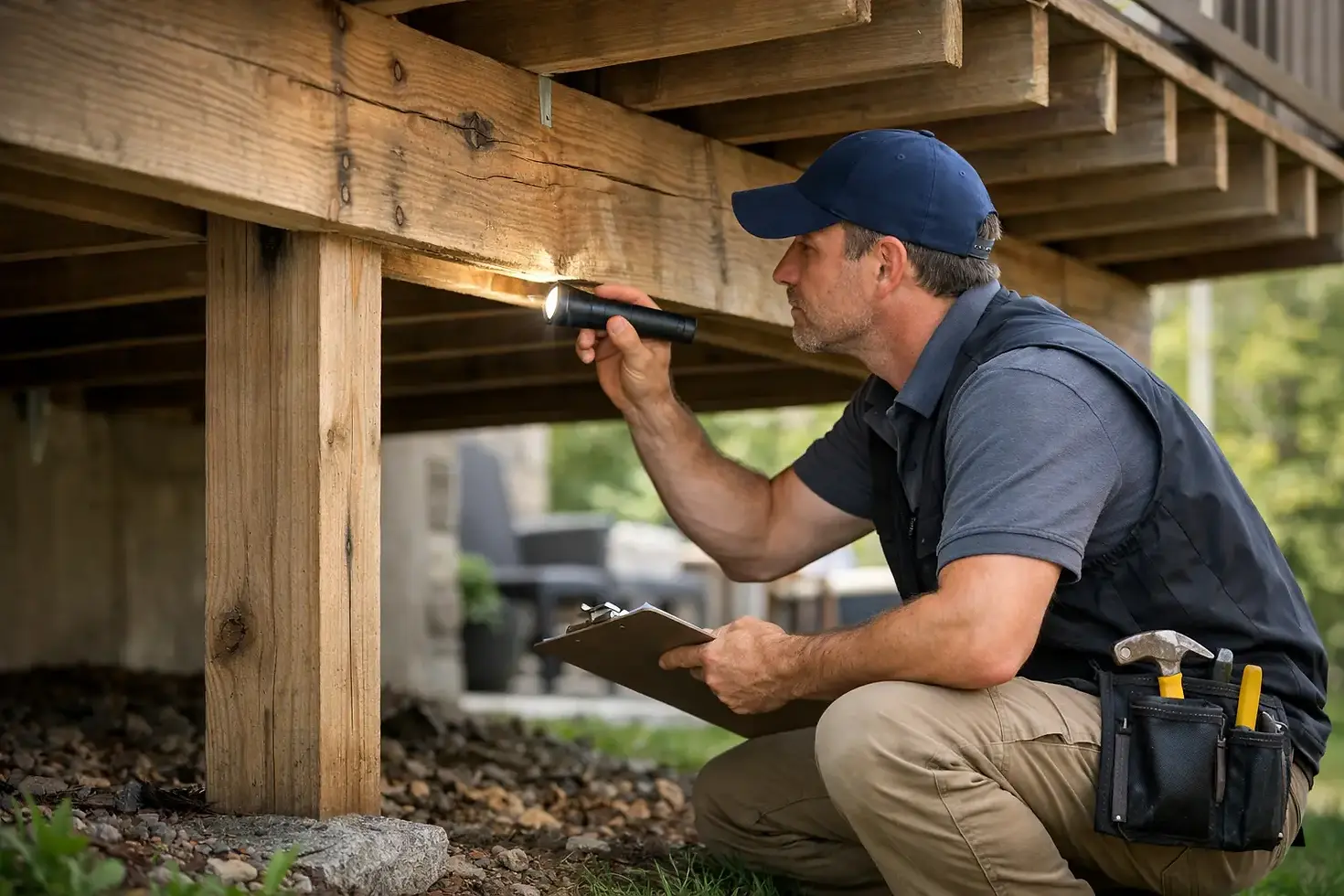
Inspecting framing means working beneath the deck, often in a confined or uneven area. Choose a dry day with good daylight, wear sturdy footwear, gloves and eye protection, and use a torch to see into corners and around fixings. Avoid crawling under a deck if the structure is noticeably sagging, unstable or supported by damaged posts.
If the deck is elevated, take a look from the ground first. You should be able to see whether the overall structure appears level, whether any posts lean, and whether beams or joists have visible bowing. A deck that moves significantly when walked on should not be ignored simply because the boards still look presentable.
For difficult access, significant height, or signs of decay around key supports, it is safer to arrange an inspection by an experienced builder. The framing carries the load. Cosmetic repairs to decking boards will not resolve a problem underneath.
Check the posts, footings and bearers
The posts are the vertical supports transferring the deck load to the ground. Look closely where each post meets the footing and where it connects to the bearer above. These are common places for moisture to sit and timber deterioration to begin.
Check for soft, darkened or crumbling timber by pressing gently with a screwdriver. Sound treated timber should feel firm. If the tool sinks in easily, or if the surface breaks away, the post may have decay that requires professional attention. Do not chip away large sections of timber or test a support aggressively.
Also look for splitting, deep cracks, insect damage, corrosion around metal brackets and post bases sitting in wet soil. Water should drain away from supports rather than pool around them. Poor drainage can shorten the life of even good-quality treated timber.
Bearers run horizontally between or across the posts and support the joists. Sight along each bearer for sagging, twisting or pronounced bowing. Minor surface checking can occur as timber dries, but deep splits, crushed areas at connections or a bearer that has dropped from its support are more serious signs.
Pay attention to ground clearance
Low decks are often harder to inspect and more vulnerable to trapped moisture. There should be enough clearance below the framing for air movement and for a person to inspect the structure where practical. Soil, garden mulch, leaves and stored items pushed beneath the deck can hold dampness against timber and conceal problems.
Clear away rubbish and vegetation carefully before inspecting. If timber is in regular contact with soil or water, ask a builder to assess whether it remains suitable for its location and exposure.
Inspect joists and blocking for movement or decay
Joists are the repeated horizontal members directly beneath the decking boards. From below, check that they are straight, evenly spaced and securely supported by the bearers. Look for water staining, fungal growth, soft timber, splitting near ends and sections that have twisted or sagged.
Pay particular attention to joist ends and cut ends. These areas can absorb moisture if they were not properly protected during construction. Where decking boards have been fixed tightly together, leaves and debris can also trap water above the joists, causing decay that may not be visible until you inspect from underneath.
Blocking or nogs between joists helps keep the frame stable. Missing, loose or badly split blocking can allow joists to roll or move over time. It is not always a sign of immediate failure, but it should be corrected if the deck feels springy or if the framing is losing alignment.
A straight edge or string line can help reveal movement across a run of joists. Keep in mind that older timber may have minor variation. The concern is a clear change in level, a localised dip, or movement that affects the deck surface above.
Examine connections, bolts and metal fixings
A deck is only as dependable as its connections. Check bolts, screws, joist hangers, brackets and anchors for corrosion, looseness or missing components. In Auckland's damp conditions and coastal areas, unsuitable or heavily corroded fixings can deteriorate faster than expected.
Surface rust on some metal components may not be urgent, but flaking metal, severe pitting, rust stains running down timber, or fixings with reduced heads should be assessed. Galvanised and stainless-steel fixings are selected for different environments, so the right repair depends on the deck's exposure and the materials already in use.
Look at bolted connections where posts meet bearers. Bolts should sit firmly with washers where required, and the timber around them should not be crushed, split or enlarged into an oval hole. A connection that has shifted can indicate timber shrinkage, movement in the footing, or a framing issue further along the deck.
Do not simply tighten every bolt you see. Over-tightening can compress timber and create further problems. If a connection is loose, identify why it became loose before making a repair.
Check the house connection carefully
Where a deck is attached to a house, the ledger connection deserves close attention. This is the horizontal board fixed against the building that supports one side of the deck. Water entering behind this connection can damage both the deck framing and the house cladding or wall structure.
From below and from the deck edge, look for staining, soft timber, corrosion, gaps, failed flashing and signs that the ledger has pulled away from the house. Also check whether water is being directed behind the deck rather than away from it.
This is not a suitable area for guesswork. The correct connection method depends on the home’s construction, cladding system and the deck design. If there is any evidence of moisture entry, movement or missing flashing, arrange a professional assessment before carrying out patch repairs.
Look for warning signs from above
A framing inspection should include a walk over the deck surface. Move slowly across the full area and notice how it feels underfoot. A sound deck should feel stable, with no sharp bounce, rocking or localised soft spots.
Watch for decking boards that have lifted, screws that are backing out, uneven gaps, low spots where water sits after rain, and boards that feel spongy. These symptoms do not always mean the framing has failed, but they can point to joist movement, inadequate drainage or decay below.
If handrails, stairs or balustrades move when gently tested, treat this as a priority. These elements need secure structural support, and loose fixings can create a fall risk even when the main deck appears stable.
When a professional inspection is the right call
Some issues are straightforward maintenance matters, such as clearing debris, improving drainage or replacing a small number of weathered boards. Others involve structural work and need a more careful approach. Seek professional advice if you find soft or rotten support timber, movement in posts or bearers, significant corrosion, a loose house connection, sagging, or an elevated deck that feels unstable.
You should also get advice before making structural changes, adding a roof, spa pool or outdoor kitchen, or replacing major framing members. Extra weight can change the demands placed on an existing deck. Depending on the work and the property, building consent or specific compliance requirements may apply.
At David Price Builder, we approach deck repairs and improvements by looking beyond the visible surface. The aim is not just to make a deck look better, but to make sure the structure beneath it is durable, properly supported and fit for the way you plan to use it.
A regular inspection after wet winter weather, and before a busy summer of outdoor use, is a practical habit. Small concerns are generally easier to address early, helping your deck remain a safe and enjoyable part of the property for years to come.


Comments